Recent Posts

FUE vs DHI vs FUT Which Hair Transplant Is Best
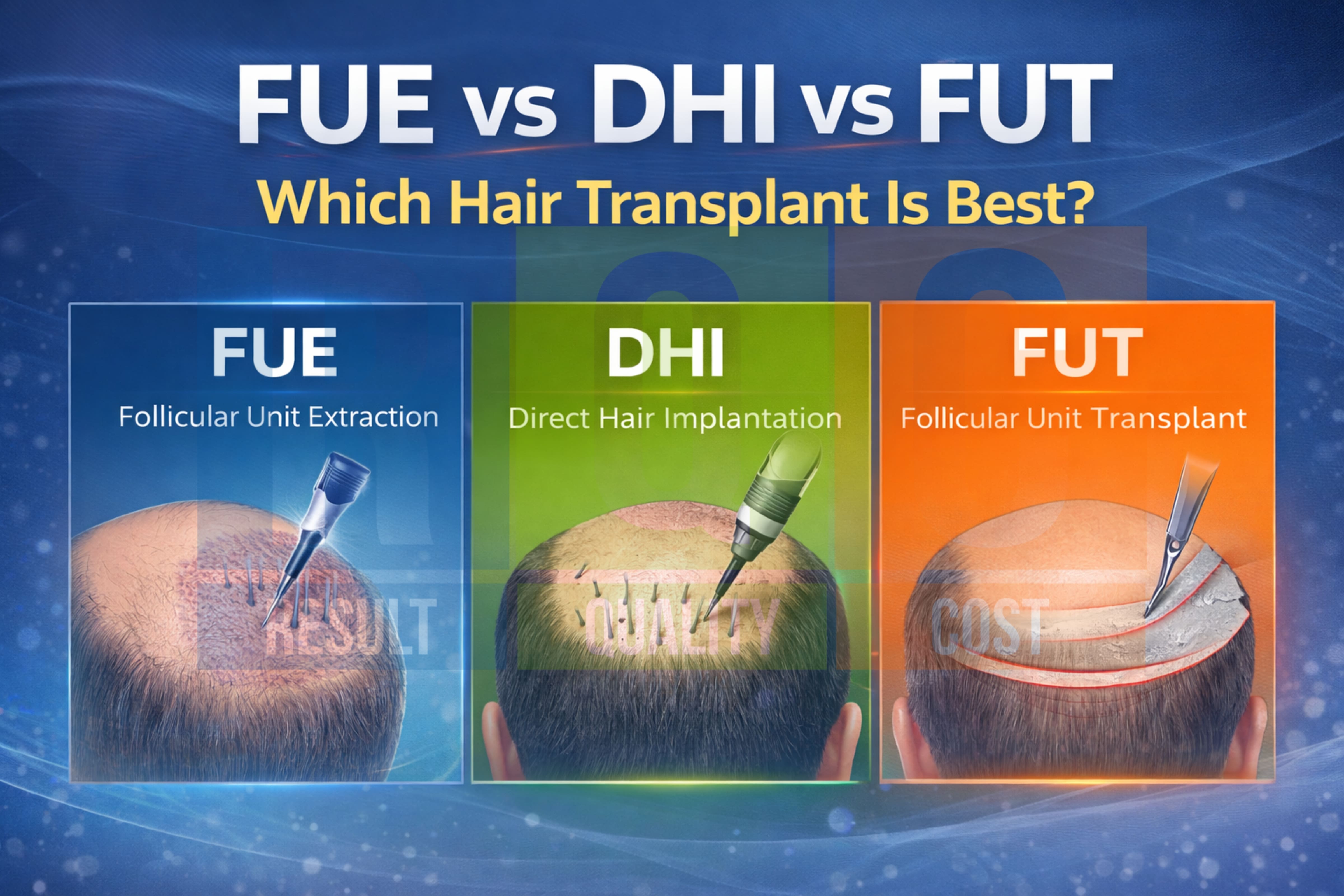
FUE hair transplant involves extracting individual hair follicles from the donor area and implanting them into thinning or bald regions. This method avoids strip removal and is widely practiced across the world.
Key features of FUE include no linear scar, minimal visible scarring, faster healing compared to traditional methods, and suitability for short hairstyles. Because of these benefits, FUE is commonly chosen by patients who want natural-looking results with minimal downtime.
For many patients wondering Which Hair Transplant Is Best for daily routines and professional life, FUE becomes a strong option due to its faster recovery and flexibility.
FUT Hair Transplant (Follicular Unit Transplantation)
FUT hair transplant involves removing a thin strip of scalp from the donor area. The strip is then dissected into grafts and implanted into bald areas. This method allows surgeons to obtain a higher number of grafts in a single session.
FUT benefits include high graft yield, suitability for advanced baldness, and donor preservation in selected cases. However, FUT usually leaves a linear scar, which may limit short hairstyles.
In patients with extensive hair loss and good scalp laxity, FUT can still be a practical solution when planned correctly. In some advanced cases, FUT may answer the question of Which Hair Transplant Is Best more effectively than other methods.
DHI Hair Transplant (Direct Hair Implantation)
DHI is a modified implantation technique where extracted grafts are implanted directly using a specialized implanter pen. It is important to clarify that DHI is not a separate extraction method but a variation of FUE.
Key features of DHI include direct implantation, no prior channel creation, and controlled placement in selected cases. While DHI may offer precision in certain situations, it requires high surgical skill and careful planning.
FUE vs FUT vs DHI Comparison
Below is a structured FUE vs FUT vs DHI comparison table:
| Parameter | FUE | FUT | DHI |
| Scarring | Tiny dot scars | Linear scar | Tiny dot scars |
| Healing Time | 7–10 days | 10–14 days | 7–10 days |
| Pain Level | Mild | Slightly higher | Mild |
| Graft Yield | Moderate–High | High | Moderate |
| Suitable for | Most patients | Advanced baldness | Select cases |
| Best Technique for Quick Healing | ✔ | ❌ | ✔ |
| Cost | Moderate | Slightly lower | Slightly higher |
| Density Control | High | High | High (implant precision) |
Difference Between FUE and FUT Hair Transplant
One of the most searched topics is the Difference Between FUE and FUT Hair Transplant.
FUE:
Which Hair Transplant Is Best?
There is no single answer. Which Hair Transplant Clinic Is Best depends on factors such as grade of baldness, donor density, hair texture, hair shaft thickness, age, and long term progression of hair loss.
Patients looking for natural appearance, flexibility, and faster recovery often benefit from FUE-based methods. Patients with advanced hair loss and high graft requirement may benefit from FUT or a combined approach.
A proper evaluation is far more important than blindly choosing a popular technique.
Best Technique for Quick Healing
If quick healing is a priority, FUE and DHI usually provide faster recovery compared to FUT. Patients with professional commitments or limited downtime often prefer FUE, making it a popular answer to Which Hair Transplant Is Best for working individuals.
When FUT May Still Be the Better Option
Despite modern advancements, FUT still has relevance. It may be preferred in cases requiring very high graft numbers, good scalp laxity, advanced Norwood patterns, or maximum donor harvesting.
In carefully selected patients, FUT can deliver strong results when performed by an experienced surgeon.
Best Hair Transplant for Women
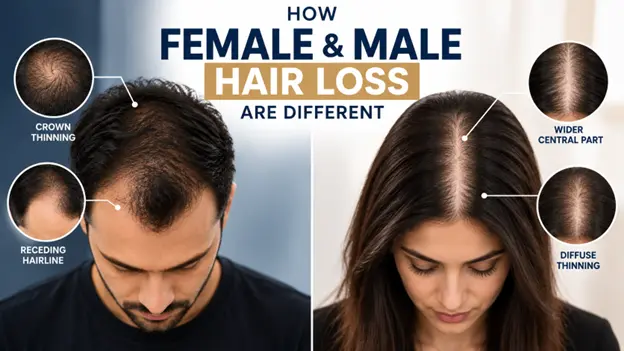
Hair transplant planning for women is different due to diffuse thinning patterns, hairline preservation, and the need for minimal shaving. In most cases, FUE based techniques are preferred for women as they allow selective extraction without disturbing existing hair.
Decision Framework: How to Choose
Use this simplified decision guide:
| Condition | Suggested Approach |
| Early baldness | FUE |
| Moderate baldness | FUE / DHI |
| Advanced baldness | FUE with strategic planning / FUT |
| Need quick healing | FUE |
| Need maximum grafts in one session | FUT |
| Female hair thinning | FUE-based technique |
Hair Transplant Success Rate
When performed by experienced surgeons:
Technique alone does not determine outcome — execution matters more than method.
Common Myths About FUE vs DHI vs FUT
❌ DHI gives double density automatically
❌ FUT is outdated and unsafe
❌ FUE is scar-free
❌ DHI is completely different from FUE
In reality:
Skill, planning, donor management, and implantation angle determine results.
Hair Transplant Success Rate
When performed by experienced surgeons, success rates of FUE, FUT, and DHI are similar, often exceeding 90 percent graft survival. Technique alone does not guarantee success. Execution, planning, donor management, and implantation angle determine final outcomes.
Cost Consideration
Cost varies depending on graft count, technology used, surgeon experience, and geographic location. In India, hair transplant procedures are cost-effective while maintaining international medical standards. However, cost should never be the sole factor when deciding Which Hair Transplant Is Best.
What Matters More Than Technique
Hairline design, natural angle placement, donor preservation, long-term planning, and realistic density distribution matter more than the technique itself. The technique is only a tool. The surgeon is the architect.
At Rqchairtransplant, treatment planning focuses on long-term donor safety and natural aesthetics rather than one-size-fits-all solutions. According to Dr. Vivek Galani, selecting the right technique requires understanding both present hair loss and future progression.
Final Verdict
If you are searching for Which Hair Transplant Is Best, remember that no single technique is superior for everyone. The best technique is the one that suits your scalp condition, donor capacity, and long-term goals. Professional evaluation and ethical planning are essential before making a decision.
