Recent Posts

Can Smoking Affect Hair Transplant Results After Surgery?
Hair transplant surgery has become one of the most effective and permanent solutions for hair loss. Modern techniques such as FUE allow patients to achieve natural looking results with minimal downtime. However, the success of a hair transplant does not depend solely on the surgeon's skill or the technology used. Patient lifestyle choices before and after surgery can significantly influence the final outcome.
One of the most important yet often overlooked factors is smoking.
Many patients ask:
• Can smoking affect hair transplant results?
• Is smoking after hair transplant surgery dangerous?
• Can I smoke after FUE hair transplant?
• Does smoking cause hair loss?
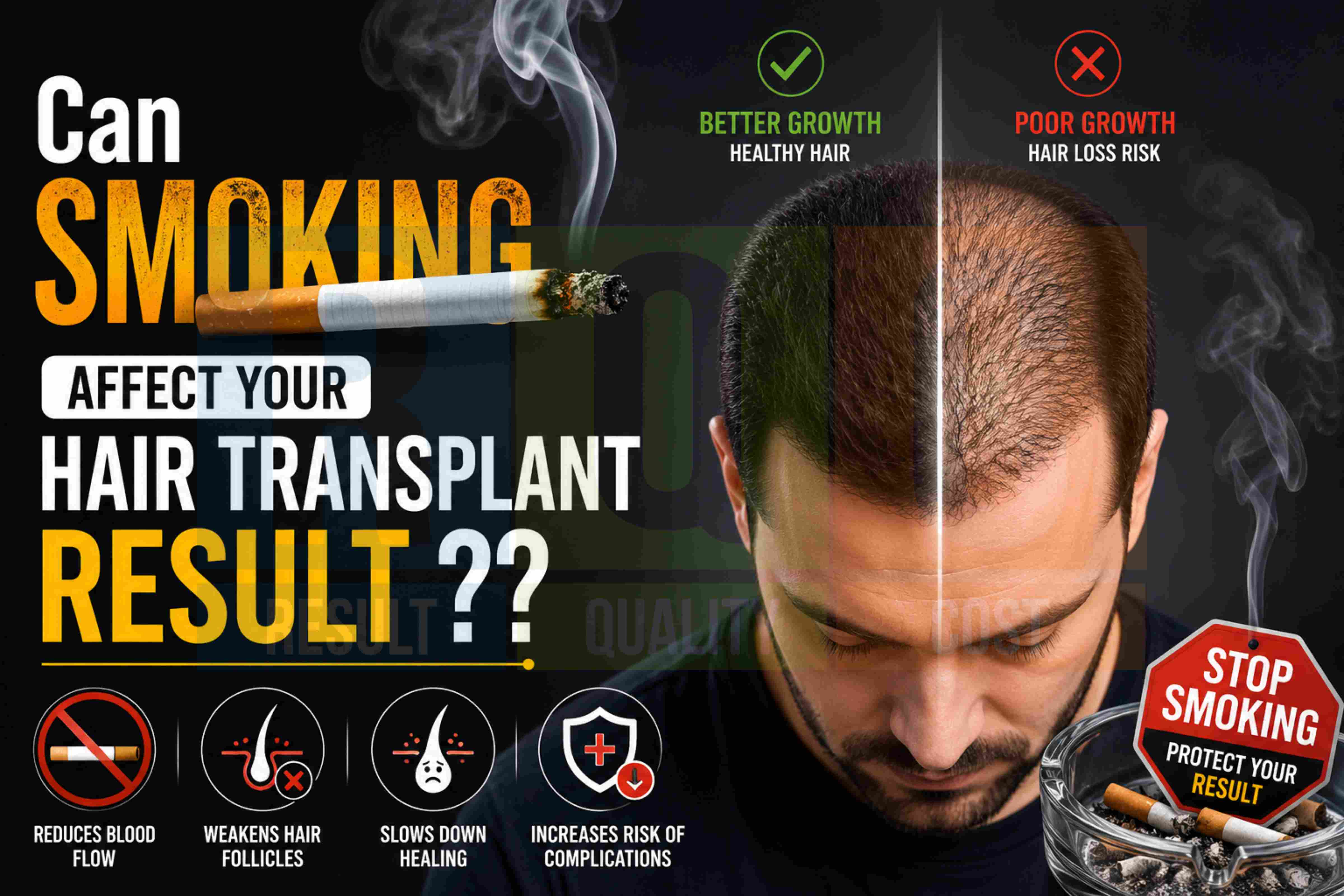
The short answer is yes. Smoking can negatively affect healing, graft survival, hair growth, and ultimately the final hair transplant results.
This guide explains exactly how smoking impacts transplanted hair and what you should do to maximize your results.
Why Blood Supply Is Critical After a Hair Transplant
To understand can smoking affect hair transplant results, it is important to understand how transplanted grafts survive.
During a hair transplant, follicles are extracted from the donor area and implanted into the recipient area. Once implanted, these follicles temporarily lose their direct blood supply.
For the first few days, the body begins creating new micro blood vessels around the transplanted grafts.
Hair Transplant Healing Process
| Stage | What Happens |
| Day 0 | Grafts implanted |
| Day 1 to 3 | Initial healing begins |
| Day 3 to 7 | New blood vessel formation |
| Week 2 to 4 | Grafts become established |
| Month 3 to 4 | New growth starts |
| Month 12+ | Final results visible |
Any factor that interferes with blood circulation during this critical period can affect graft survival and overall hair transplant results.
What Happens When You Smoke?
A cigarette contains thousands of chemicals, but two are especially harmful for transplant healing.
Nicotine
Nicotine causes blood vessels to constrict.
Carbon Monoxide
Carbon monoxide reduces the amount of oxygen available to tissues.
Together, they create conditions that may delay healing and reduce the effectiveness of recovery.
Smoking's Effect on Healing
Smoking
↓
Reduced Blood Flow
↓
Less Oxygen Delivery
↓
Slower Healing
↓
Reduced Graft Survival
↓
Poor Hair Growth
Can Smoking Affect Hair Transplant Results?
Yes. Can smoking affect hair transplant results is one of the most important questions patients should consider before surgery.
1. Reduced Blood Circulation
Healthy blood flow is essential for:
• Oxygen delivery
• Nutrient transport
• Follicle survival
Smoking reduces circulation throughout the body, including the scalp. When blood flow decreases, newly transplanted follicles may receive less nourishment.
2. Slower Healing
Healing requires oxygen, growth factors, and proper circulation.
Smoking after hair transplant surgery may contribute to:
• Prolonged redness
• Delayed recovery
• Longer healing time
3. Lower Graft Survival
The first few weeks are crucial for graft survival. Poor circulation can potentially reduce the ability of grafts to establish themselves successfully.
4. Increased Inflammation
Smoking promotes inflammation throughout the body. Excessive inflammation may interfere with normal healing and recovery.
5. Increased Risk of Infection
Although infections after hair transplant surgery are uncommon, smoking may impair the body's natural healing response.
Smoking After FUE Hair Transplant
Many patients assume that because FUE is minimally invasive, smoking does not matter as much.
This is a misconception.
Whether you undergo:
• FUE Hair Transplant
• FUT Hair Transplant
• Beard Transplant
The grafts still require:
✔ Blood supply
✔ Oxygen
✔ Healing
Therefore, smoking after FUE hair transplant can negatively impact recovery and influence long-term hair transplant results.
Smoking Effect on Hair Growth
The smoking effect on hair growth is not limited to transplanted hair.
Research suggests that smoking may contribute to:
• Premature hair thinning
• Hair follicle damage
• Increased oxidative stress
• Reduced scalp circulation
Hair Growth Comparison
| Factor | Non Smoker | Smoker |
| Blood circulation | Excellent | Reduced |
| Oxygen delivery | Normal | Lower |
| Healing speed | Faster | Slower |
| Hair quality | Better | Reduced |
| Hair growth environment | Optimal | Compromised |
Does Smoking Cause Hair Loss?
Many patients ask, does smoking cause hair loss?
While smoking may not be the sole cause of hair loss, studies suggest it can contribute to worsening hair thinning.
Possible mechanisms include:
Oxidative Stress
Smoking generates free radicals that damage cells.
Follicle Aging
Hair follicles may age faster.
Reduced Nutrient Delivery
Follicles receive less oxygen and nutrients.
Increased Inflammation
Inflammatory processes can affect scalp health.
How Long Should You Avoid Smoking?
One of the most common questions is:
"When can I start smoking again after a hair transplant?"
Most surgeons recommend avoiding smoking during the critical healing period.
Recommended Timeline
| Time Period | Recommendation |
| 1 to 2 weeks before surgery | Stop if possible |
| First 7 days after surgery | Absolutely avoid |
| First 14 days | Strongly avoid |
| First month | Best to avoid completely |
The longer you avoid smoking, the better your healing environment becomes.
Warning Signs Smoking May Be Affecting Recovery
Contact your clinic if you notice:
• Excessive redness
• Persistent swelling
• Delayed healing
• Increased pain
• Signs of infection
While these symptoms are not always caused by smoking, they should be evaluated promptly.
Tips to Improve Hair Transplant Results
If you want the best possible outcome:
Before Surgery
✔ Stop smoking if possible
✔ Stay hydrated
✔ Follow preoperative instructions
After Surgery
✔ Avoid smoking after hair transplant
✔ Take medications as prescribed
✔ Sleep with head elevated
✔ Eat protein-rich foods
✔ Attend follow-up visits
Myths About Smoking and Hair Transplants
Myth 1: One Cigarette Won't Matter
Even a single cigarette causes temporary blood vessel constriction.
Myth 2: Only Heavy Smokers Are at Risk
Any nicotine exposure affects blood flow.
Myth 3: FUE Is Unaffected by Smoking
All transplanted grafts require proper circulation.
Myth 4: Smoking Only Affects the Lungs
Smoking affects blood vessels throughout the body, including those supplying the scalp.
Final Thoughts
If you're asking, "Can smoking affect hair transplant results?", the answer is clear.
Smoking after hair transplant surgery can:
• Reduce blood flow
• Slow healing
• Affect graft survival
• Potentially compromise final density
A hair transplant is a significant investment in your appearance and confidence. Giving your grafts the best possible environment during recovery can help maximize the outcome.
The few weeks after surgery are temporary, but your hair transplant results are intended to last for years.
