Recent Posts

Smoking After Hair Transplant: Risks and Warnings
A hair transplant is a long term investment in your appearance, confidence, and hair restoration journey. Modern techniques such as FUE Hair Transplant have made hair restoration more effective than ever. However, achieving the best hair transplant results depends not only on the procedure itself but also on proper recovery and hair transplant aftercare.
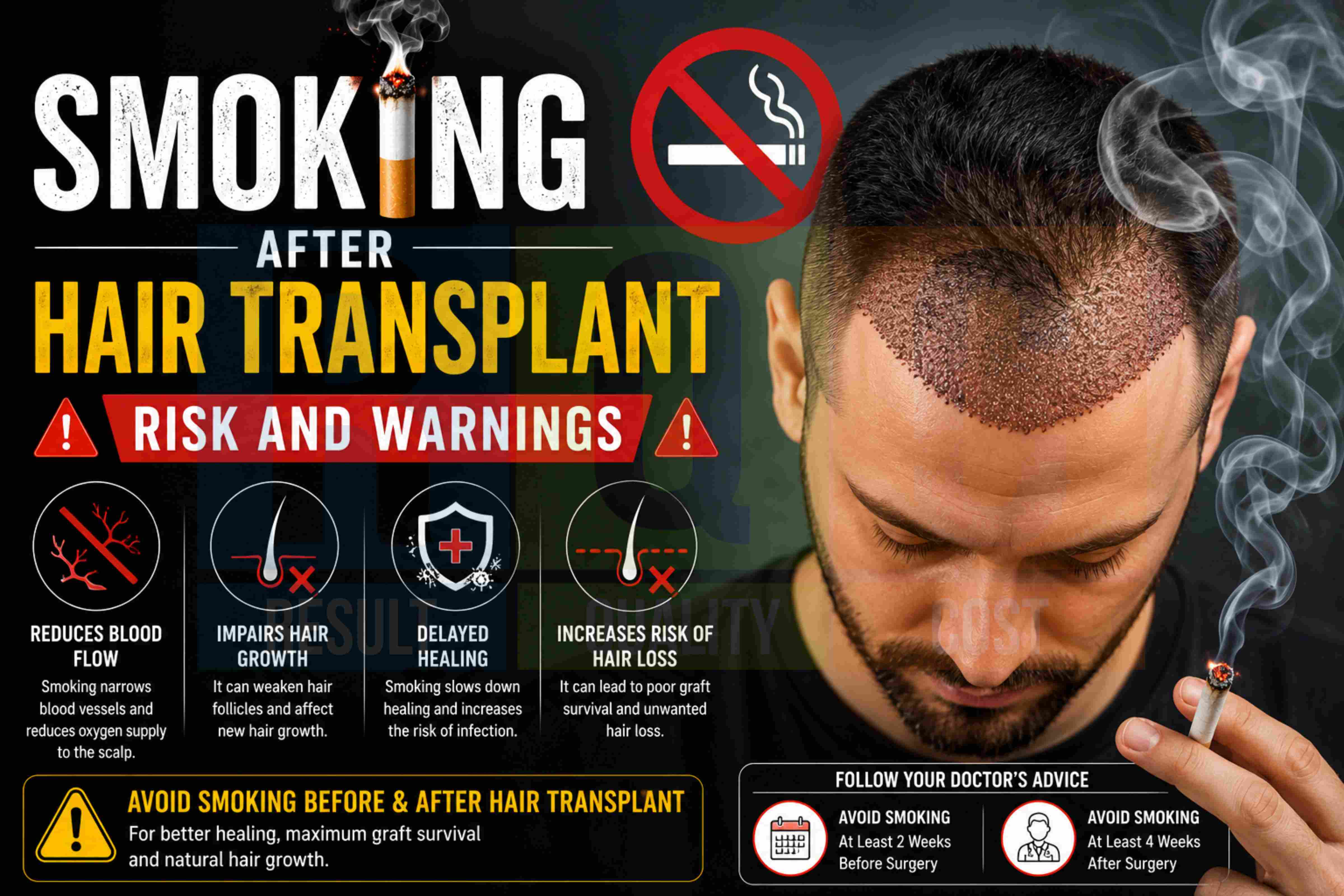
One of the most common mistakes patients make after surgery is smoking too soon. Many people underestimate the smoking effect on hair transplant recovery and assume that a few cigarettes will not make a difference. In reality, smoking after hair transplant surgery can interfere with healing, reduce blood circulation, and potentially affect graft survival.
Many patients ask:
● Can I smoke after a hair transplant?
● What are the risks of smoking after hair transplant?
● When to stop smoking after hair transplant?
● How does smoking affect hair growth after surgery?
This guide explains everything you need to know about smoking after hair transplant procedures and why surgeons strongly recommend avoiding it during recovery.
Why Recovery Is the Most Important Phase
Many patients believe the surgery is the most important part of the process. While surgical skill plays a major role, the healing period is equally important.
During the first few weeks after surgery:
● Tiny blood vessels begin forming around transplanted follicles
● Grafts establish a new blood supply
● Healing occurs in both donor and recipient areas
Any disruption during this period can impact hair transplant results.
What Happens When You Smoke After a Hair Transplant?
Cigarette smoke contains thousands of chemicals that can negatively affect healing.
The two most harmful substances are:
Nicotine
Nicotine causes blood vessels to narrow, reducing blood circulation throughout the body, including the scalp.
Carbon Monoxide
Carbon monoxide lowers the amount of oxygen available to tissues and healing grafts.
Together, these substances create an environment that is not ideal for recovery.
Smoking Effect on Hair Transplant Recovery
Smoking
↓
Blood Vessel Constriction
↓
Reduced Blood Flow
↓
Lower Oxygen Supply
↓
Slower Healing
↓
Reduced Graft Support
↓
Potential Impact on Hair Transplant Results
Risks of Smoking After Hair Transplant
1. Reduced Blood Supply to Transplanted Grafts
Newly transplanted grafts require:
● Oxygen
● Nutrients
● Healthy blood circulation
Smoking reduces blood flow to the scalp, making it harder for grafts to receive the nourishment needed during the critical healing phase.
2. Delayed Healing
One of the biggest risks of smoking after hair transplant surgery is slower healing.
Patients who smoke may experience:
● Prolonged redness
● Delayed recovery
● Longer healing time
● Increased discomfort
The body depends on oxygen and proper circulation to repair tissues efficiently.
Recovery Comparison
| Factor | Non Smoker | Smoker |
| Healing Speed | Faster | Slower |
| Blood Circulation | Better | Reduced |
| Oxygen Supply | Higher | Lower |
| Recovery Quality | Better | Potentially Compromised |
3. Increased Swelling and Inflammation
Smoking may increase inflammation within the body. This can contribute to:
● More swelling
● Extended discomfort
● Slower recovery
Reducing inflammation is important for healthy graft establishment.
4. Higher Risk of Infection
Although infections are uncommon after a hair transplant, smoking may affect the body's natural healing response.
Good circulation helps the immune system function effectively during recovery.
5. Reduced Hair Growth Quality
Even when grafts survive, smoking and hair growth are closely connected.
Poor blood flow can affect:
● Hair thickness
● Hair quality
● Overall density
● Long term hair health
This is one reason why surgeons advise patients to avoid smoking after hair transplant procedures.
Smoking and Hair Growth: What Does Research Suggest?
Hair follicles need a healthy environment to grow.
Studies suggest that smoking may contribute to:
Oxidative Stress
Smoking generates free radicals that can damage cells and tissues.
Reduced Follicle Nutrition
Less oxygen reaches hair follicles.
Increased Inflammation
Inflammation may negatively affect scalp health.
Reduced Circulation
Healthy blood flow is essential for optimal hair growth.
Smoking vs Healthy Hair Growth
| Requirement for Hair Growth | Effect of Smoking |
| Blood Circulation | Reduced |
| Oxygen Supply | Reduced |
| Healing Response | Impaired |
| Follicle Environment | Weakened |
When to Stop Smoking After Hair Transplant
One of the most common questions patients ask is:
"When to stop smoking after hair transplant surgery?"
Most experienced surgeons recommend avoiding smoking before and after surgery.
Suggested Timeline
| Time Period | Recommendation |
| 1 to 2 Weeks Before Surgery | Stop if possible |
| Days 1 to 7 After Surgery | Absolutely avoid |
| Days 8 to 14 | Strongly avoid |
| Weeks 3 to 4 | Continue avoiding if possible |
| After 1 Month | Follow surgeon guidance |
The longer you avoid smoking, the better your healing environment becomes.
Can One Cigarette Affect Recovery?
Many patients believe that a single cigarette cannot make a difference.
While one cigarette is unlikely to ruin a transplant, it still causes temporary blood vessel constriction and reduces oxygen delivery.
There is no recovery benefit associated with smoking after hair transplant surgery.
Is Vaping Safer After a Hair Transplant?
Many vaping products contain nicotine.
Since nicotine is responsible for blood vessel constriction, vaping may create similar concerns during recovery.
Patients should discuss vaping with their surgeon before resuming use.
Hair Transplant Aftercare Checklist
Following proper hair transplant aftercare helps maximize graft survival and support healthy hair growth.
DO
✔ Take medications as prescribed
✔ Sleep with your head elevated
✔ Stay hydrated
✔ Eat protein rich foods
✔ Attend follow up appointments
✔ Follow clinic instructions carefully
DON'T
✘ Smoke
✘ Consume excessive alcohol
✘ Scratch grafts
✘ Exercise heavily too soon
✘ Ignore recovery instructions
Why Choosing the Right Clinic Matters
Recovery guidance is an important part of every successful transplant.
The best hair transplant clinic focuses not only on surgery but also on long term patient care.
A professional clinic provides:
● Detailed aftercare instructions
● Recovery monitoring
● Follow up appointments
● Lifestyle guidance
● Personalized support
Patients looking for a trusted hair transplant clinic in Surat should choose a clinic that prioritizes both surgical precision and post procedure care.
Why RQC Hair Transplant Clinic in Surat Focuses on Recovery
At RQC Hair Transplant Clinic in Surat, patients receive detailed recovery guidance designed to support healthy healing and long term hair growth.
The clinic emphasizes:
● Structured hair transplant aftercare
● High graft survival standards
● Natural looking outcomes
● Personalized recovery plans
● Ongoing follow up support
This approach helps patients achieve stronger and more predictable hair transplant results.
Warning Signs You Should Not Ignore
Contact your clinic immediately if you experience:
● Severe swelling
● Persistent bleeding
● Excessive redness
● Fever
● Signs of infection
Prompt medical attention helps ensure smooth recovery.
Final Thoughts
Smoking after hair transplant surgery is one of the few factors completely under a patient's control. While modern techniques can deliver excellent outcomes, recovery still depends heavily on blood circulation, oxygen supply, and healthy healing.
Understanding the smoking effect on hair transplant recovery can help you make better decisions during the critical healing period.
If you want the best possible hair transplant results:
✔ Avoid smoking after hair transplant surgery
✔ Follow proper hair transplant aftercare
✔ Attend all follow up visits
✔ Give your grafts the healthiest environment possible
The recovery period lasts only a few weeks, but your results are designed to last for years.
