Recent Posts
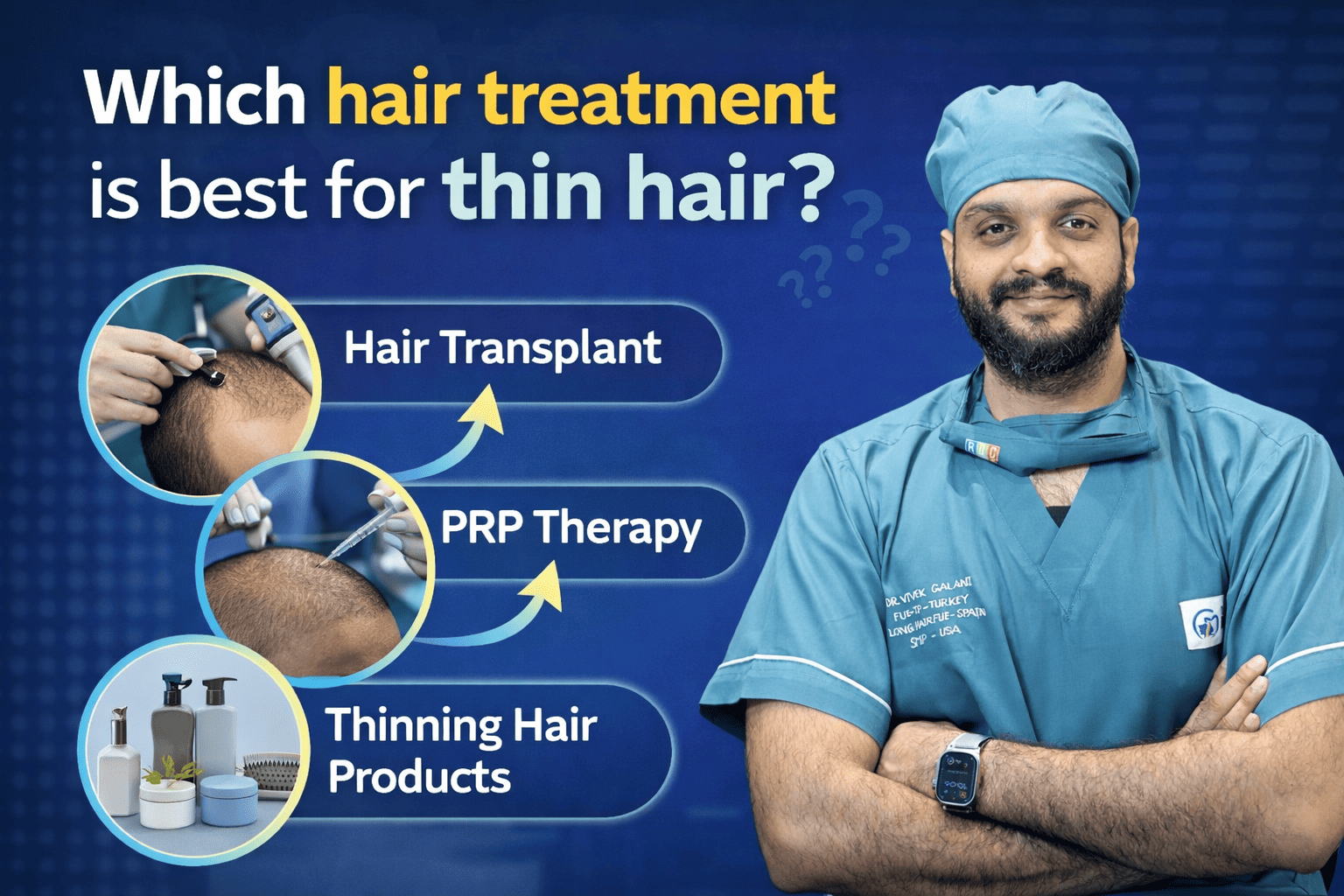
Which Hair Treatment Is Best for Thin Hair? A Complete Medical Guide
Thin hair is one of the most common and confusing hair concerns. Unlike complete baldness, thinning hair often progresses slowly - making it harder to decide when to act and which treatment actually works.
Many people delay treatment, hoping shampoos or home remedies will help, only to realize later that thinning has worsened. This guide explains thin hair treatment options in a structured, medical way, helping you choose the best hair treatment for thin hair based on your condition.
What Is Thinning Hair and Why It’s Not the Same as Baldness
Thinning hair refers to a reduction in hair shaft thickness, density, or volume, while hair follicles are still present. This is different from baldness, where follicles are permanently lost.
Common signs of thinning hair:
- Reduced ponytail volume
- Visible scalp under bright light
- Widening part line
- Hair becoming finer over time
Understanding this distinction is crucial because early thinning is often reversible or controllable with the right treatment.
Major Causes of Thin Hair
Before choosing a treatment, identifying the cause is essential.
Common causes include:
- Genetic sensitivity (early male/female pattern hair loss)
- Hormonal imbalance
- Nutritional deficiencies
- Stress and lifestyle factors
- Post-illness or post-pregnancy shedding
- Poor scalp health
Each cause responds to Different hair thinning solutions, which is why a single “best” treatment does not exist for everyone.
Thin Hair Remedies: What Helps and What Doesn’t
Many patients first try thin hair remedies at home. Some support scalp health, but they rarely reverse true thinning.
Home remedies – Their realistic role:
| Remedy | Helps With | Limitations |
| Oil massage | Blood flow | Does not regrow hair |
| Onion juice | Scalp stimulation | Temporary effect |
| Aloe vera | Scalp comfort | No follicle revival |
| DIY masks | Hair texture | Cosmetic only |
These remedies may support medical treatment, but they are not standalone solutions.
Medical Treatment for Thin Hair
When thinning is detected early, medical treatment for thin hair can slow progression and improve thickness.
Common medical options:
- Topical growth stimulants
- Oral medications (where appropriate)
- Nutritional correction
- Scalp health optimization
These treatments aim to strengthen existing follicles rather than create new ones.
Best Thinning Hair Treatment: Stage-Based Approach
The best thinning hair treatment depends on the stage of thinning.
Treatment Selection Framework
| Thinning Stage | Recommended Treatment |
| Mild thinning | Medical therapy + scalp care |
| Moderate thinning | Medical therapy + regenerative treatment |
| Advanced thinning | Combined therapy or hair transplant |
| Patchy thinning | Targeted regenerative therapy |
| Long-standing thinning | Hair transplant evaluation |
This framework helps answer the common question:
“For thin hair, which treatment is best?”
Advanced Hair Thinning Solutions
When medical treatment alone is insufficient, advanced therapies are considered.
Regenerative treatments may:
- Improve hair shaft thickness
- Increase growth cycle duration
- Reduce further thinning
Hair Transplant for Thinning Hair: When Is It Needed?
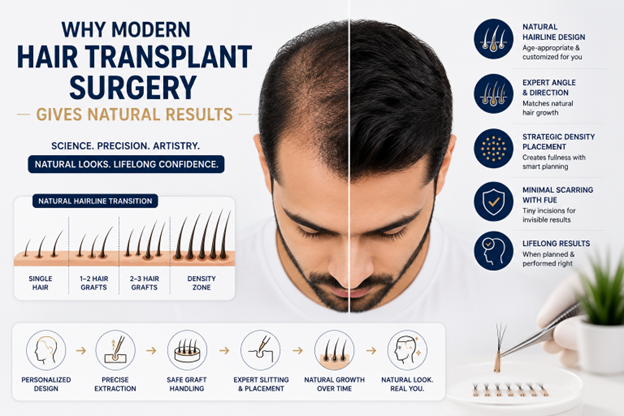
Contrary to popular belief, hair transplant for thinning hair is not always about bald patches.
A transplant may be considered when:
- Thinning areas have weak or miniaturized follicles
- Density cannot be restored medically
- Hairline or crown needs structural correction
How to Stop Hair Thinning Early
Stopping progression early delivers the best long-term results.
Practical steps:
- Early diagnosis
- Consistent treatment adherence
- Stress management
- Correct nutritional intake
- Scalp health maintenance
How to Regrow Thinning Hair: What’s Realistic?
A common misconception is expecting full regrowth in all cases.
What regrowth usually means:
- Increased thickness of existing hair
- Reduced scalp visibility
- Slower progression of hair loss
- Cosmetic density improvement
Hair Regrowth Options in Surat
- Accurate diagnosis
- Stage-based treatment
- Long-term planning
- Ethical advice (not overtreatment)
Why Professional Evaluation Matters
Choosing treatment without diagnosis often leads to wasted time and money.
At RQC Hair Transplant Clinic, thinning hair is approached as a progressive medical condition, not a cosmetic issue - ensuring the right intervention at the right time.
Final Summary: Choosing the Right Treatment for Thin Hair
| Question | Key Takeaway |
| Is thin hair treatable? | Yes, especially early |
| Are home remedies enough? | No, supportive only |
| Is a transplant always needed? | Only in advanced cases |
| Can thinning be reversed? | Thickness can improve |
| Best approach? | Diagnosis + stage-based treatment |
If you are experiencing thinning hair and are unsure which treatment is right for you, a structured medical evaluation is the most effective first step.
