Recent Posts
Why Does Hair Fall Increase During Summer Season?
Aug 25, 2026Can Hair Fall Be Controlled Without Surgery in Early Stage?
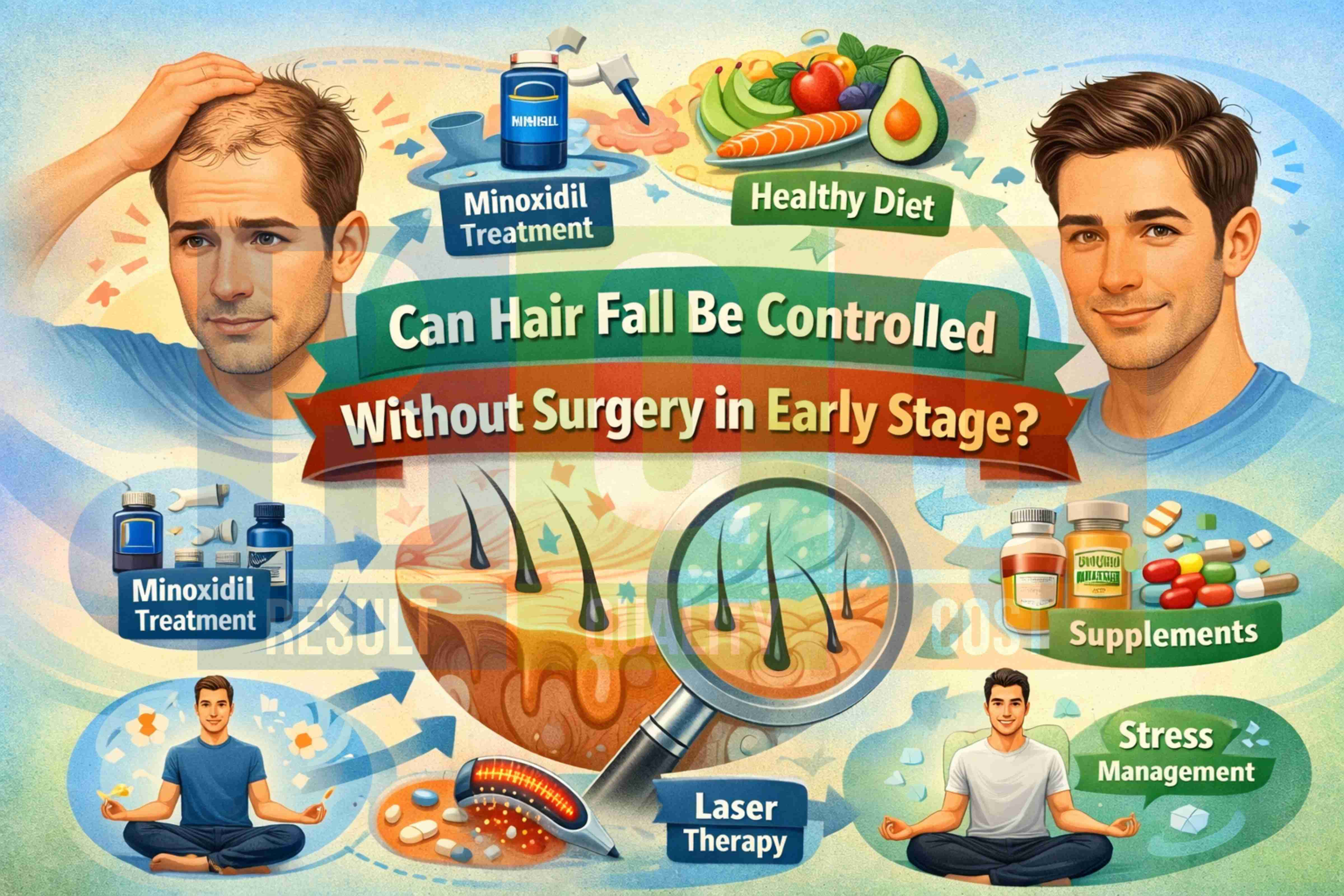
Hair fall is one of the most common concerns today, especially among people in their 20s and 30s. The moment someone notices increased shedding on their pillow or thinning in the mirror, the first fear is usually whether they will need a hair transplant. The good news is that Hair Fall Be Controlled Without Surgery provided you act during the early stages of hair loss. Many people assume that surgery is the only answer, but medical science has advanced to a point where early intervention can yield incredible results.
If you are searching for a hair fall treatment in early stage or effective hair thinning solutions, this guide by Rqchairtransplant will give you a clear, realistic, and medically accurate roadmap to restoring your hair density.
Understanding Early-Stage Hair Loss and its Symptoms
Before answering whether hair fall can be Controlled Without Surgery, it is important to understand what the early stage actually means. At this point, your hair follicles are still alive and active, but they are undergoing a process called miniaturization. This means the follicles are shrinking and producing thinner, shorter, and weaker strands of hair.
Early-stage hair loss symptoms often include:
• A widening hair part or visible scalp under bright lights.
• A slight recession of the hairline around the temples.
• Excessive hair shedding during washing or combing.
• A noticeable reduction in the volume of your ponytail or hair bun.
This stage is often reversible or controllable because the density is reducing gradually rather than being completely lost. Once a follicle dies and skin grows over it, only surgery can help. Therefore, the window of opportunity for non-surgical hair regrowth is limited to these initial phases.
Hair Loss Stages vs Reversibility Chart
| Stage | Condition | Can It Be Controlled Without Surgery? |
| Early thinning | Follicles active and thinning | Yes, high success rate |
| Moderate thinning | Follicles weakening significantly | Partially, requires combination therapy |
| Advanced baldness | Follicles dormant or dead | No, surgery is usually required |
Why Hair Fall Starts Early in Modern Times
Hair loss is rarely due to one single cause. According to Dr. Vivek Galani, understanding the root cause is essential before choosing any treatment path. Modern lifestyles have introduced several factors that trigger early hair fall in young adults.
Common Triggers for Early Hair Loss:
1. Genetic Sensitivity (DHT):
Dihydrotestosterone is a hormone that can shrink hair follicles in those with a genetic predisposition.
2. Nutritional Deficiencies:
A lack of essential vitamins like Biotin, Vitamin D, and minerals like Iron can lead to brittle hair and shedding.
3. Stress and Cortisol:
High stress levels push hair follicles into a resting phase, causing sudden hair fall.
4. Hormonal Imbalances:
Issues with the thyroid or PCOS in women can significantly impact hair density.
5. Environmental Factors:
Pollution, hard water, and UV rays damage the hair shaft and scalp health.
Hair Fall Be Controlled Without Surgery: The Scientific Reality
Yes, hair fall can definitely be managed through non-surgical methods as long as the follicles are still producing hair. These methods work by strengthening existing follicles, improving blood supply to the scalp, and extending the growth phase of the hair cycle.
When you choose Controlled Without Surgery methods, you are essentially bio-hacking your scalp to perform better. These treatments do not create new follicles but they maximize the potential of the thousands of follicles you already have.
Non-Surgical Hair Regrowth Options at Rqchairtransplant
If you are looking for non-surgical hair regrowth, there are several effective methods available at specialized clinics like Rqchairtransplant.
| Treatment Type | How it Works | Best For |
| PRP Therapy | Uses growth factors from your blood | Early thinning and shedding |
| GFC Treatment | Advanced version of PRP with higher growth factors | Faster results in density |
| Medical Therapy | FDA approved lotions and tablets | Hormonal and genetic hair loss |
| Nutrition Therapy | Supplements and diet planning | Deficiency related hair loss |
| Laser Therapy | Low level light to stimulate cells | Improving overall scalp health |
PRP and GFC: The Gold Standard for Early Stage Treatment
PRP (Platelet Rich Plasma) and GFC (Growth Factor Concentrate) are the leading choices for hair fall treatment in early stage. These processes involve using your own plasma to stimulate weak follicles.
Dr. Vivek Galani explains that these treatments act like a fertilizer for your scalp. By injecting concentrated growth factors directly near the hair roots, we can jump-start the repair process. Most patients see a significant reduction in hair fall within the first two sessions, and visible thickness improves over the following months.
Natural Hair Restoration Tips for Daily Care
While medical treatments are vital, many people also seek natural hair restoration tips to support their progress at home. These practices help improve the external quality of your hair but should not be used as a total replacement for professional medical advice.
Effective Natural Practices for Daily Life:
• Balanced Protein Intake:
Since hair is 90% protein, include eggs, lentils, and lean meats in your diet.
• Scalp Hygiene:
Use a mild, sulfate-free shampoo to keep the scalp free from fungal infections and oil buildup.
• Wooden Combs:
Switch to a wide-tooth wooden comb to reduce static and mechanical breakage.
• Scalp Massage:
Spend 5 minutes daily massaging your scalp to improve blood circulation to the follicles.
How to Regrow Hair Naturally: A Reality Check
When people ask how to regrow hair naturally, it is important to have a reality check. There is a lot of misinformation online about home remedies regrowing hair on bald spots. Natural methods can improve the quality of your existing hair and support growth by providing the right environment. However, they cannot regrow hair in areas where the follicles have already died or scarred over. For true restoration in thinning areas, a combination of lifestyle changes and professional hair thinning solutions is required.
The Importance of Professional Diagnosis at Rqchairtransplant
One of the biggest mistakes people make is self-treating with random oils or shampoos. Hair fall is not a one size fits all issue. At Rqchairtransplant, every treatment begins with a professional diagnosis.
Dr. Vivek Galani and his team analyze the scalp to determine if the hair loss is temporary (like Telogen Effluvium) or permanent (like Androgenetic Alopecia). Knowing the difference is the only way to ensure that your hair fall treatment in early stage actually works. Using the wrong products can often worsen the condition by clogging pores or irritating the scalp.
Lifestyle Changes That Make a Difference
Many cases of early hair fall improve significantly with simple lifestyle adjustments.
1. Sleep Cycles:
Your body repairs tissues, including hair follicles, during deep sleep. Ensure 7 to 8 hours of rest.
2. Hydration:
Dehydration makes hair brittle and more likely to break from the mid-shaft.
3. Avoiding Heat:
Constant use of straighteners or blow dryers on high heat weakens the keratin bonds.
4. Stress Management:
Practices like yoga or meditation can lower cortisol levels, which is a major trigger for hair fall.
When to Consider Surgery vs Non-Surgical Paths
While we focus on how Hair Fall Be Controlled Without Surgery, there comes a point where surgery might be the better long-term investment. If your hairline has receded significantly and the skin is smooth and shiny, it indicates that the follicles are no longer present. In such cases, Rqchairtransplant offers advanced FUE and DPI techniques. However, if you still have "peach fuzz" or thin hair in the area, non-surgical hair thinning solutions should be your first priority.
Final Conclusion: Early Action is Key
In conclusion, the answer to "Can hair fall be controlled without surgery?" is a resounding yes. The technology and medical treatments available today at clinics like Rqchairtransplant are highly effective. However, the success of these treatments depends entirely on timing. Hair damage prevention and early intervention are much more affordable and easier than a full surgical restoration later in life.
